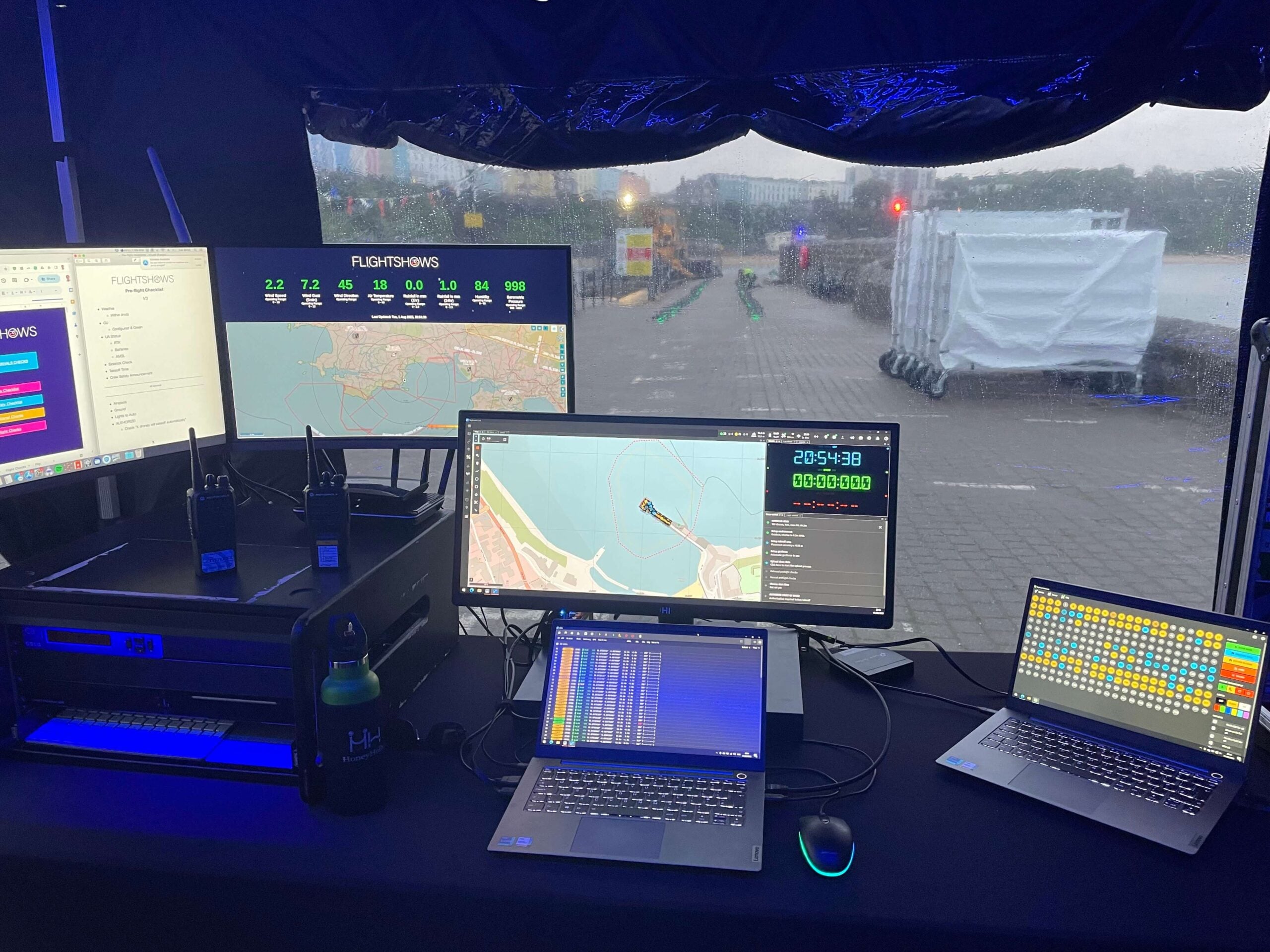
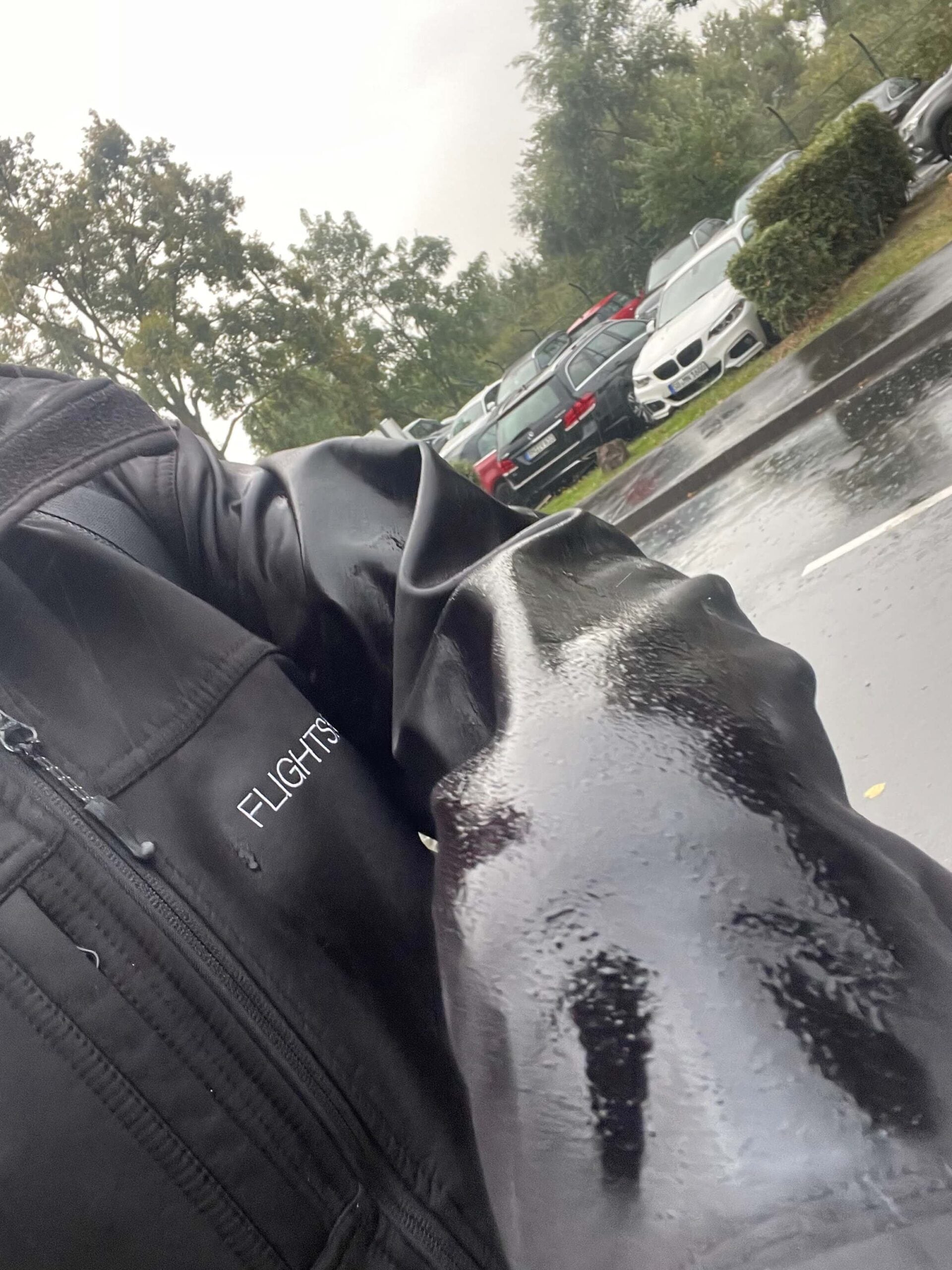
One of the most understandable concerns when booking a drone show is the weather. After all, the drones are flying outdoors, often hundreds of feet above the ground, and in Britain there is always a reasonable chance that the forecast will contain wind, cloud, rain, or all three.
The reassuring answer is that a drone show does not require a perfectly still, dry summer evening. We have invested heavily in aircraft capable of operating in the sort of conditions we genuinely encounter in the UK, rather than building an operation around ideal weather. Our drones can operate in winds of up to 45 km/h, can fly in the rain, and can work throughout the normal range of British winter and summer temperatures.
Those limits are important because drone fleets are not all the same. Different aircraft have very different capabilities, and weather tolerance should not simply be assumed from one drone show operator to another. One of the reasons we chose the aircraft we use was precisely because we knew we would be operating at weddings, festivals, public events and corporate shows throughout the UK, where waiting for completely calm weather is not a realistic business model.
There are still limits, of course, and the final decision to fly always rests with the Remote Pilots. But wind, cloud or a bit of rain in the forecast absolutely does not mean that a drone show is automatically in trouble.
Can Drone Shows Fly in Wind?
Yes, and this is probably the area where clients are most surprised by what our drones can cope with.
Our aircraft can operate in winds of up to 45 km/h. That is a fairly serious breeze, and considerably more than the sort of conditions many people imagine would stop a drone show. It means that a windy evening, an exposed venue or a forecast showing noticeable wind does not automatically put the performance at risk.
This capability was not accidental. Weather tolerance was an important consideration when we invested in our fleet. We knew from the beginning that if we were going to operate commercially throughout the UK, the aircraft needed to cope with real British weather rather than only the sort of conditions you might choose for a pleasant afternoon flying a small consumer drone.
Of course, there is more to the decision than simply reading a single number from a weather app. Our flight team looks at sustained wind, gusts, how the conditions are developing and what is actually happening at the site. Forecasts can also change considerably as show time approaches, so a windy symbol appearing on your phone three days before an event is certainly not a reason to assume the show will not happen.
The important thing is that we are not relying on calm weather to make the product work. We have deliberately built an operation that has a substantial usable weather window.
Can a Drone Show Fly in Rain?
Yes.
Our drones can operate in light and moderate rain, so the first drops of rain do not mean we suddenly have to abandon the show.
This is another area where the practical reality can be quite different from what people expect. Depending on the conditions, the audience may become uncomfortable before the drones become unable to fly. If it is raining heavily enough that everybody has disappeared under umbrellas or gone back inside the venue, then the question begins to become less about whether the aircraft can technically fly and more about whether anybody can actually enjoy watching them.
For that reason, rain is assessed as part of the whole event. We consider how heavy it is, how long it is expected to last, whether visibility is being affected and whether there is a better opportunity to fly a little earlier or later.
A passing shower is very different from several hours of severe weather. Because a drone show might only need ten or fifteen minutes of suitable conditions, we can often work around rain rather than treating any wet weather as an automatic cancellation.

What About Cloud, Mist and Fog?
Normal cloud is generally not a problem at all. A grey British sky might not look particularly inspiring during the afternoon, but it does not prevent a drone show from operating.
The important issue is visibility.
Our flight operation still needs to maintain the required Visual Line of Sight conditions. If very low cloud, mist or fog becomes severe enough that the pilots cannot maintain the necessary visibility of the aircraft and surrounding airspace, then that can affect whether we can fly.
There is also an even simpler practical test: if the conditions are so poor that we cannot see the drone show, the audience probably cannot see it either.
Fortunately, weather severe enough to create that problem is relatively unusual. Ordinary cloud cover is nothing to worry about, and in many cases a dark cloudy sky actually provides a perfectly good backdrop for the show.
Can Drone Shows Fly in Cold Weather?
Yes. The normal range of UK winter temperatures is well within the sort of conditions in which we can operate.
Cold weather mainly requires sensible battery management. Batteries behave differently at low temperatures, so if we are working in below-freezing conditions we can keep them warm before they are fitted to the drones and manage them appropriately throughout the operation.
A frosty December evening therefore does not mean that a Christmas drone show is likely to be cancelled. In fact, cold winter evenings are often very good for drone shows because darkness arrives early and the audience does not need to stay up until 10pm waiting for the sky to become properly dark.

What About Hot Weather?
Normal UK summer temperatures are also well within our operating environment.
Very high temperatures always need to be considered when working with batteries and electronics, but for the sort of temperatures we normally experience in Britain, a hot summer day is much more likely to be something our crew notices while unloading cases than something that stops the aircraft from flying.
For once, the weather may actually be pleasant for our crew!

How Do We Monitor the Weather Before a Drone Show?
We monitor the forecast as the event approaches, with increasing attention as we get closer to the actual performance time. The important distinction is that we are interested in the weather during the relatively short period in which the drones need to fly, not simply whether a weather app says “rain” or “wind” somewhere within a 24-hour period.
A forecast that says rain on Saturday does not necessarily mean rain at 9:30pm. A windy afternoon might become a much calmer evening. A shower might move through twenty minutes earlier than expected, or a weather front might arrive later.
This is why we do not make unnecessary decisions several days in advance based on a general forecast. We continue monitoring the situation and, once we are on site, we can compare the forecast with the actual conditions we are experiencing.
Weather is something we plan around continuously rather than something we suddenly discover at show time.
Sometimes We Just Wait for a Weather Window
One of the great advantages of a drone show is that the actual flying time is relatively short. Even when the overall weather for an evening is poor, there can often be a perfectly suitable window in which to launch the show.
If there is a heavy shower moving through at the planned performance time and the wider event schedule allows us to wait for twenty minutes, we may simply wait for it to pass. Equally, if the weather is expected to deteriorate later, there may occasionally be an opportunity to bring the show slightly forward.
This is where being an experienced event company matters as much as being a drone operator. Events rarely happen under laboratory conditions. Timings move, weather changes and plans need to adapt. Our job is to understand what is important, keep monitoring the conditions and find the best opportunity to deliver the show safely.
Cancellation is not our first response to an imperfect forecast.
Who Makes the Final Weather Decision?
The final go/no-go decision rests with the Remote Pilots. They are trained, experienced and know the aircraft, the procedures and the limits they are operating within. If the conditions are not safe, they simply will not press the button.
Safety always comes first, but that does not mean being unnecessarily conservative simply because there is some wind or rain. A professional operator should understand the actual capabilities of its aircraft, know the genuine operating limits and make a decision based on the conditions at the site.
That is particularly important because the weather limits of different drone fleets can vary significantly.
When comparing drone show companies, it is therefore worth asking what their aircraft can actually operate in. “Weather dependent” can mean very different things depending on the fleet behind the show.
Our own investment in aircraft with strong weather capability was deliberate. We wanted to maximise the chances of delivering the show when the British weather is less than perfect, rather than having a product that only works on the nicest evenings of the year.
What Happens If the Weather Really Does Stop the Show?
There are occasionally conditions in which we simply cannot fly safely. If the weather remains outside our operating limits and there is no realistic window in which to perform, the drones stay on the ground.
What happens after that depends on the type of show booked.
With a bespoke drone show, we will normally work with the client to find a mutually agreeable alternative date.
Our stock drone shows have weather-related refund provisions if we are unable to perform, subject to the terms of the individual product booked.
We would always rather deliver the show, though, which is why we monitor the conditions, look for suitable weather windows and make cancellation the final option rather than the first.
Should I Worry If the Forecast Looks Bad?
Usually, no.
If you have booked a FlightShows drone show and the forecast starts looking unpleasant several days before the event, you do not need to start trying to make the operational decision yourself.
Let us worry about the weather.
We know the limits of the aircraft, we monitor the forecast, we assess the actual conditions at the venue and we will let you know if there is genuinely something that could affect the performance.
A forecast showing wind does not automatically mean the drones cannot fly. Rain does not automatically mean the drones cannot fly. Cloud does not automatically mean the drones cannot fly.
The question is whether the actual conditions at the time of the show remain within the safe operating limits of the aircraft and flight operation.
Very often, they do.
Drone Show Weather: The Quick Answers
Can drone shows fly in wind?
Yes. FlightShows’ aircraft can operate in winds of up to 45 km/h, giving us a substantial operating window compared with what many people expect from a drone fleet.
Can drone shows fly in rain?
Yes. We can operate in light and moderate rain. In many situations, audience comfort or visibility becomes a problem before the aircraft themselves are unable to operate.
Can drone shows fly when it is cloudy?
Yes. Ordinary cloud cover is generally irrelevant. Very low cloud, mist or fog only becomes an issue when it affects the visibility required for the operation or prevents the audience from seeing the show properly.
Can drone shows fly below freezing?
Yes. Cold weather is managed through appropriate battery preparation, including keeping batteries warm before fitting them to the aircraft where necessary.
Can drone shows fly in hot weather?
Yes. Normal UK summer temperatures are not a problem, with appropriate battery and equipment management.
What wind speed cancels a drone show?
There is no universal figure because different drone fleets have different capabilities. Our aircraft can operate in winds of up to 45 km/h, although the flight team will always assess the complete conditions before making the final decision.
What happens if a drone show is cancelled because of weather?
For bespoke shows, we normally work with the client to find a mutually agreeable alternative date. Stock shows have their own weather-related refund provisions, subject to the terms of the particular booking.
Built for the Weather We Actually Get
Anybody can plan a drone show around a perfectly still, warm and dry summer evening.
That is not the environment we built FlightShows for.
We knew we would be operating throughout Britain, at exposed venues, in winter, in coastal locations, at festivals and at events where the date cannot simply be moved because the forecast is less than perfect. That influenced the aircraft we invested in and the operating capability we wanted from the fleet.
The result is a drone show operation that can tolerate considerably more weather than many clients initially expect. Winds can reach 45 km/h. Light and moderate rain can be flown in. Cold British winter nights are manageable. Cloud is rarely relevant unless it becomes a genuine visibility problem.
None of that means we ignore the weather. Quite the opposite. We monitor it carefully because understanding the conditions is part of operating professionally.
But there is an important difference between imperfect weather and unsafe weather.
A good drone show company should know exactly where that difference lies.
If you are considering a drone show and wondering whether the weather at your venue or time of year will be a problem, get in touch with FlightShows. We can talk you through the likely conditions, the capabilities of our fleet and what would actually happen if the British weather decides not to cooperate.