There is no single ideal number of drones for every show. A simple logo or short visual sequence may need far fewer drones than detailed text, a recognisable character or a large public-show narrative.
The right fleet depends on:
- The images, words or logos you want to create
- The level of detail they need
- Whether the animation is two- or three-dimensional
- The viewing distance and audience size
- The available operational space
- Your budget
The aim is not to sell the largest possible fleet. It is to choose the smallest fleet that can express the idea clearly and create the right impact for the audience.
See what more drones actually gives you
The easiest way to understand drone numbers is to see the difference for yourself.
Use the slider below to move between different fleet sizes and see how the same basic idea changes as more drones become available. Try a logo, a shape or some text, or enter your own wording and see what happens.
More drones do not simply make the picture bigger. They give our designers more points to work with, which means smoother curves, clearer lettering, finer detail and more freedom to create complex animation.
Have a play with it. Start at 100 drones, then move up through 300, 500 and beyond. You may be surprised by how much can already be achieved with a relatively small fleet.
What should I be looking for?
Pay attention to the detail rather than just the number of lights. A simple shape may look great with 100 drones, while a detailed logo or a long piece of text can quickly run out of resolution.
That is exactly how we approach a real show. We start with what you want the audience to see, then work out how many drones are actually needed to make it look good. Sometimes that is 150. Sometimes it is 300. Sometimes the idea genuinely benefits from 1,000 or more.
The important bit is choosing the right number of drones for the design, rather than choosing a number first and trying to fill them.
30–100 drones: the wedding-show range
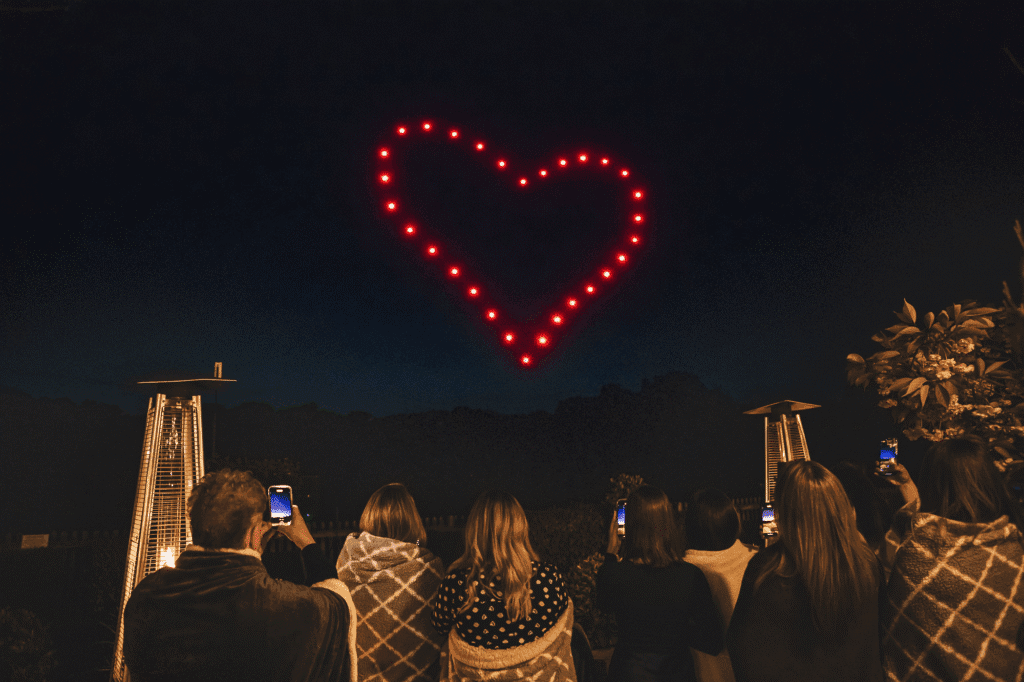
FlightShows’ wedding range begins with the 30-drone Bronze package at £6,500. Silver uses 50 drones and costs £7,500, while Gold uses 100 drones and costs £9,750.
Each wedding package contains animation designed specifically for its fleet size, so the differences between Bronze, Silver and Gold are clear before booking.
Our wedding drone shows currently start at £6,500.
100–150 drones: clear messages and recognisable images
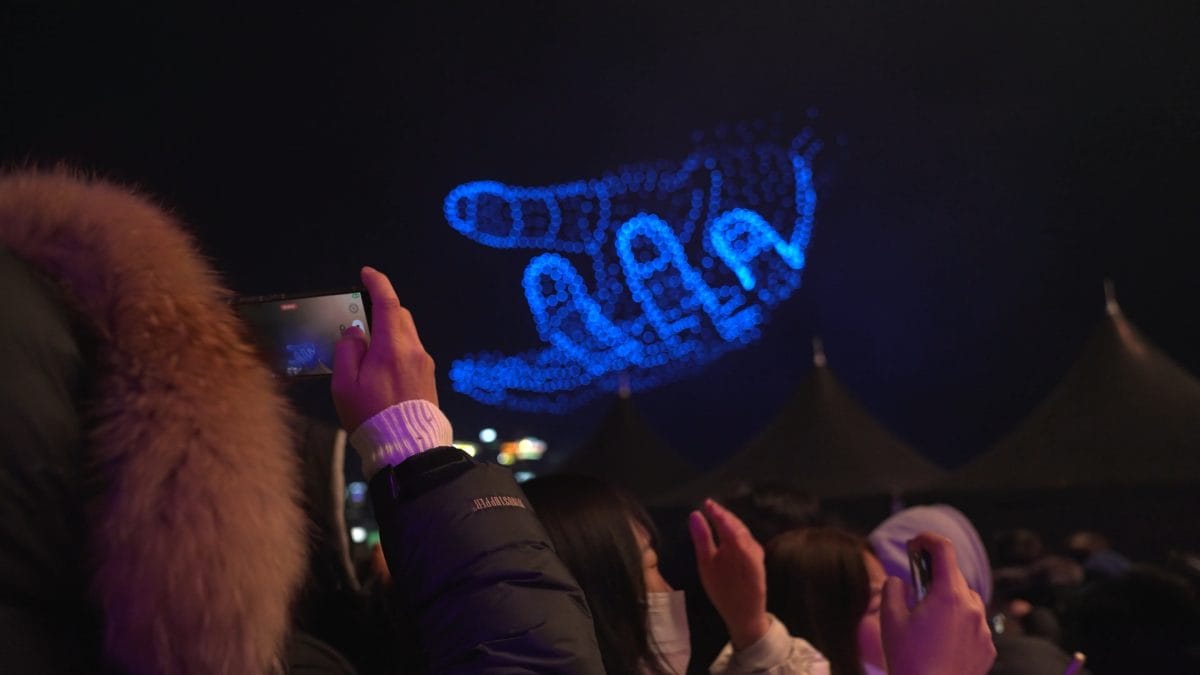
At approximately 100 to 150 drones, there is more freedom to create recognisable logos, symbols, characters and story-led transitions.
FlightShows’ non-wedding stock shows use 150 drones. This is enough to produce a compelling display when the content has been designed specifically for the available fleet. We have used this scale for private celebrations, public events and branded work.
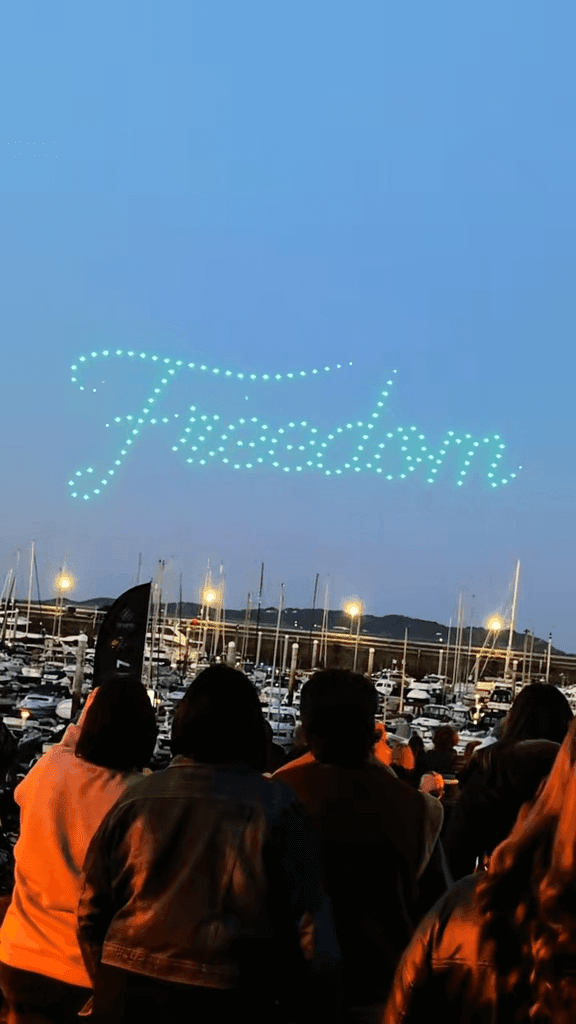
As a useful creative guide, a legible letter often uses around 15 drones. That does not mean every word requires 15 drones multiplied by the number of letters: longer phrases can appear in separate scenes, and the exact requirement changes with the font, movement and viewing distance.
See what a 150-drone show can create for practical examples.
200–300 drones: more detail and creative freedom
A fleet of around 200 to 300 drones gives the animation team more points to work with. That can mean smoother curves, clearer text, more detailed characters, richer transitions and several visual elements appearing together.
This range can suit:
- Brand and product storytelling
- Public celebrations
- Corporate events
- Festival moments
- More detailed bespoke narratives
It is often a strong balance between creative freedom, operational scale and budget. Many clients initially assume they need a four-figure fleet, but discover that a well-designed 200- or 300-drone show can deliver the experience they actually want.
500 or more drones: complex, large-scale spectacle
Larger fleets can create highly detailed images, substantial three-dimensional forms, multiple simultaneous elements and expansive transitions.
They are often used for major public celebrations, large festivals, stadium-scale audiences and global campaigns. The additional aircraft also bring additional transport, setup, crew and operational requirements, so the decision should be driven by the creative brief rather than the number alone.
More drones mean more detail, not automatically a larger image
Drone count is often compared with image resolution. Adding drones gives the designer more points with which to draw a smoother curve, clearer face or more detailed logo.
The physical size of an image also depends on the spacing between aircraft, the permitted operational volume and the audience’s viewing position. A 150-drone shape can still occupy a dramatic area of sky. A larger fleet primarily allows us to fill that space with more information and detail.
The design determines the fleet
Logos and lettering
Simple icons are usually more efficient than intricate logos. Short words are easier to present at once, while longer messages can be broken into scenes. Around 15 drones per letter remains a helpful early guide, but the final count depends on the typeface, legibility and movement.
Two-dimensional and three-dimensional animation
A two-dimensional outline can use fewer drones than a three-dimensional object requiring visible depth and multiple surfaces. If the design rotates, transforms or contains several layers, it may need a larger fleet.
Viewing distance and audience size
A small private audience may see the show from a relatively controlled position. A large public audience could be spread across a much wider area. We design for the actual viewing conditions rather than treating every event alike.
Available ground and airspace
The venue can place a practical limit on fleet size. The launch layout, operational volume, safety areas, surrounding obstacles and airspace all have to be assessed. If the site cannot safely support the intended fleet, the answer may be a smaller show, a different display position or another venue. We cannot simply squeeze more drones into the available space.
Budget
More aircraft increase equipment, preparation, transport and operational requirements. The best brief gives us both the creative ambition and a realistic budget, allowing us to concentrate the drones where they make the greatest visual difference.
A simple way to choose
Ask these questions in order:
- What must the audience recognise: a symbol, a short message, a detailed logo or a complete story?
- How many elements need to appear at the same time?
- Does the animation need three-dimensional depth?
- How far away will the audience be?
- Can the venue support the required operational space?
- What budget should the design work within?
- Would an existing stock show suit the event, or does it need a bespoke production?
The answers normally point towards a sensible range quickly. We can then test the idea creatively and assess the venue before recommending a final fleet.
Want to compare the creative ambition with the likely budget? Read what affects the cost of a drone light show or send FlightShows your idea.