
A drone can make a point of light in the sky.
Hundreds of drones can make a picture.
But pictures alone do not make a show.
For us, the most exciting thing about drone light shows is their ability to tell stories on an enormous scale. The sky becomes a stage on which characters can move, objects can transform, ideas can develop and an audience can be taken on a journey through music, movement and light.
That is the difference between displaying a series of impressive formations and creating a drone show.
At FlightShows, storytelling sits at the heart of our bespoke work.
Start With the Story, Not the Shapes
A creative brief often begins with a list.
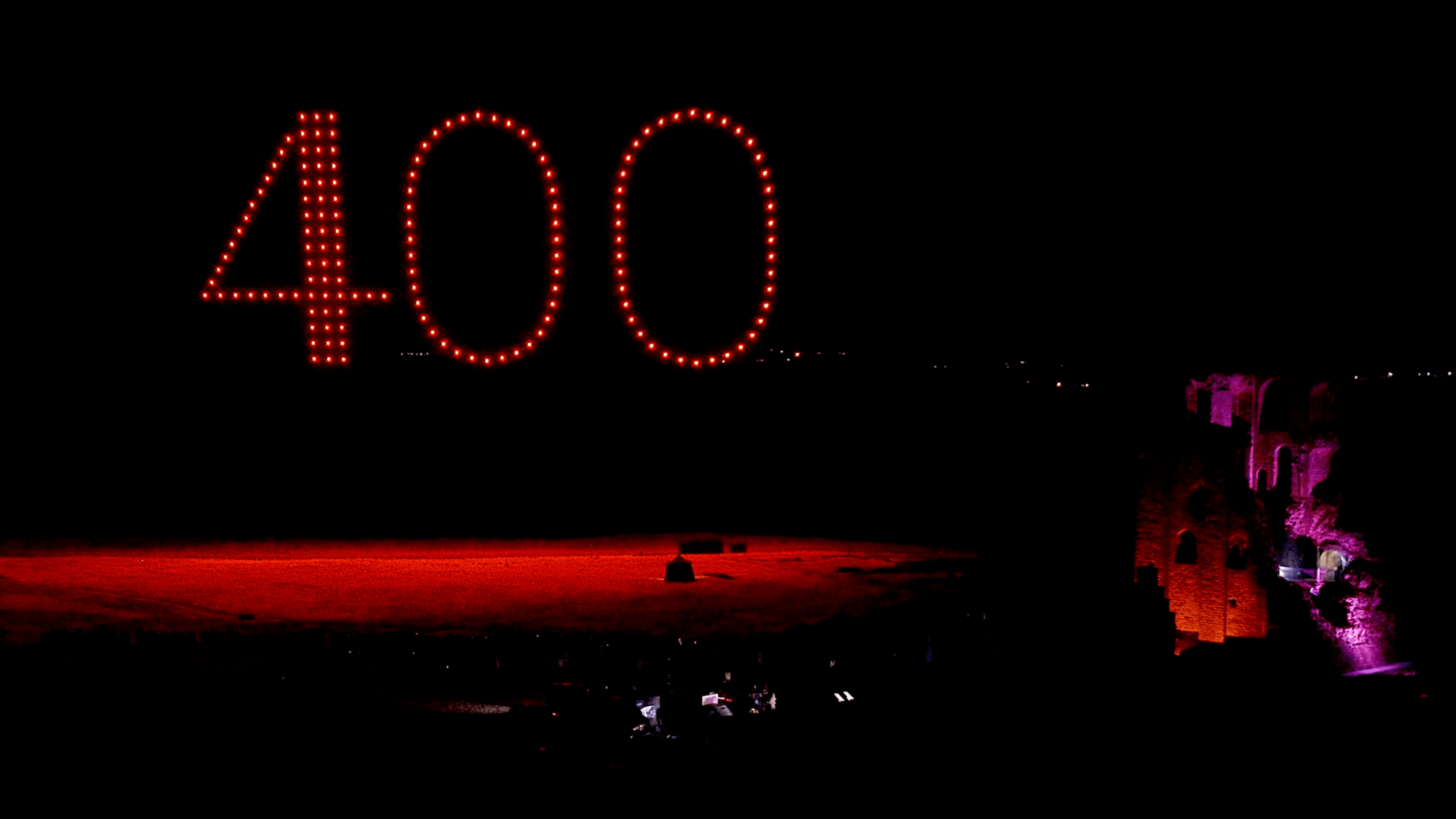
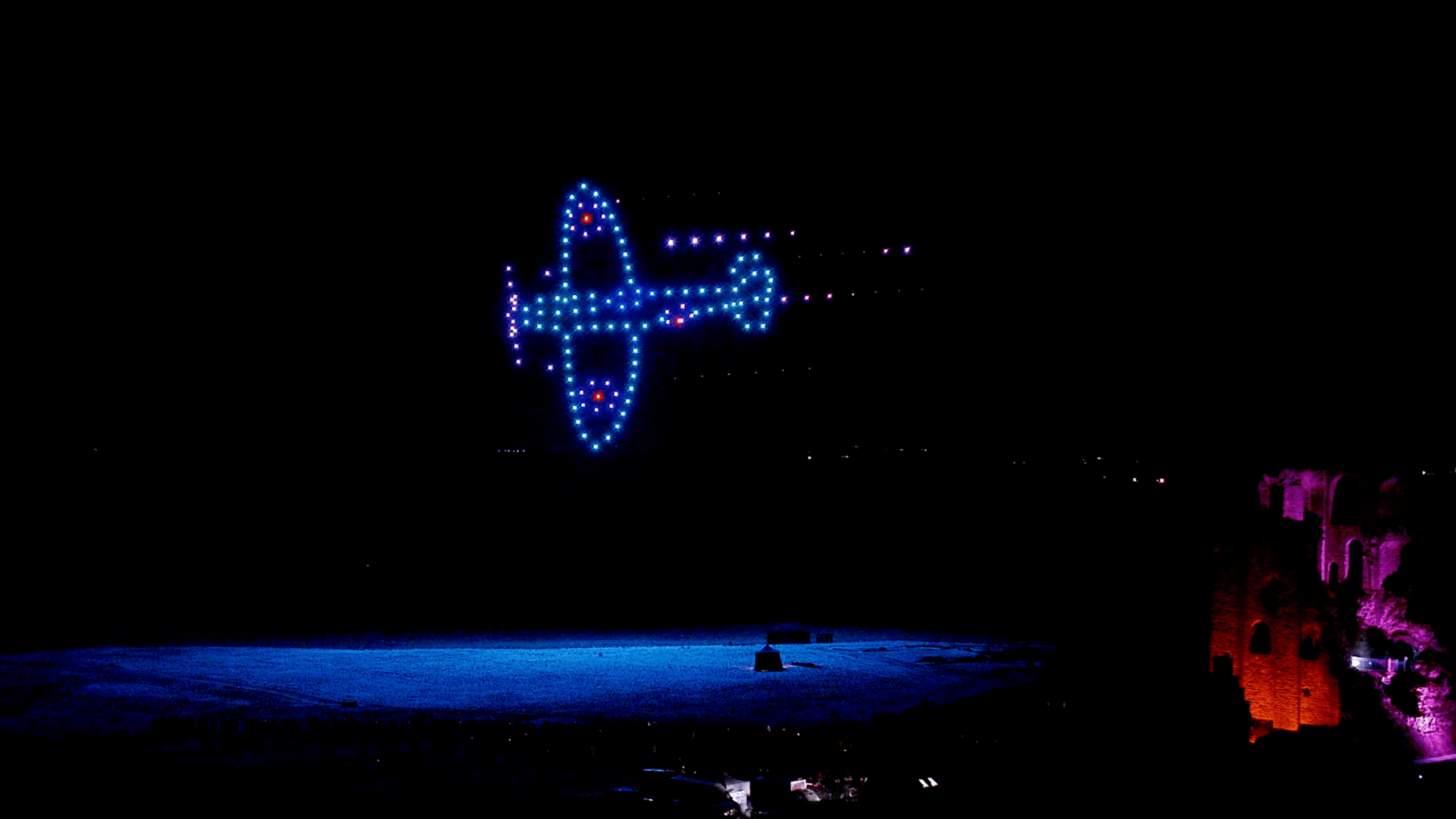
A company might want its logo, a product, an anniversary number and a few images connected with its history. A couple might want places, people or moments that mean something to them. A public event might have a theme, a local story or a piece of history it wants to celebrate.
Those are useful ingredients. But our job is not simply to put them in the sky one after another.
The first question is: what are we trying to say?
What should the audience understand?
What should they feel?
Where does the show begin, and where should it take them?
What is the moment we are building towards?
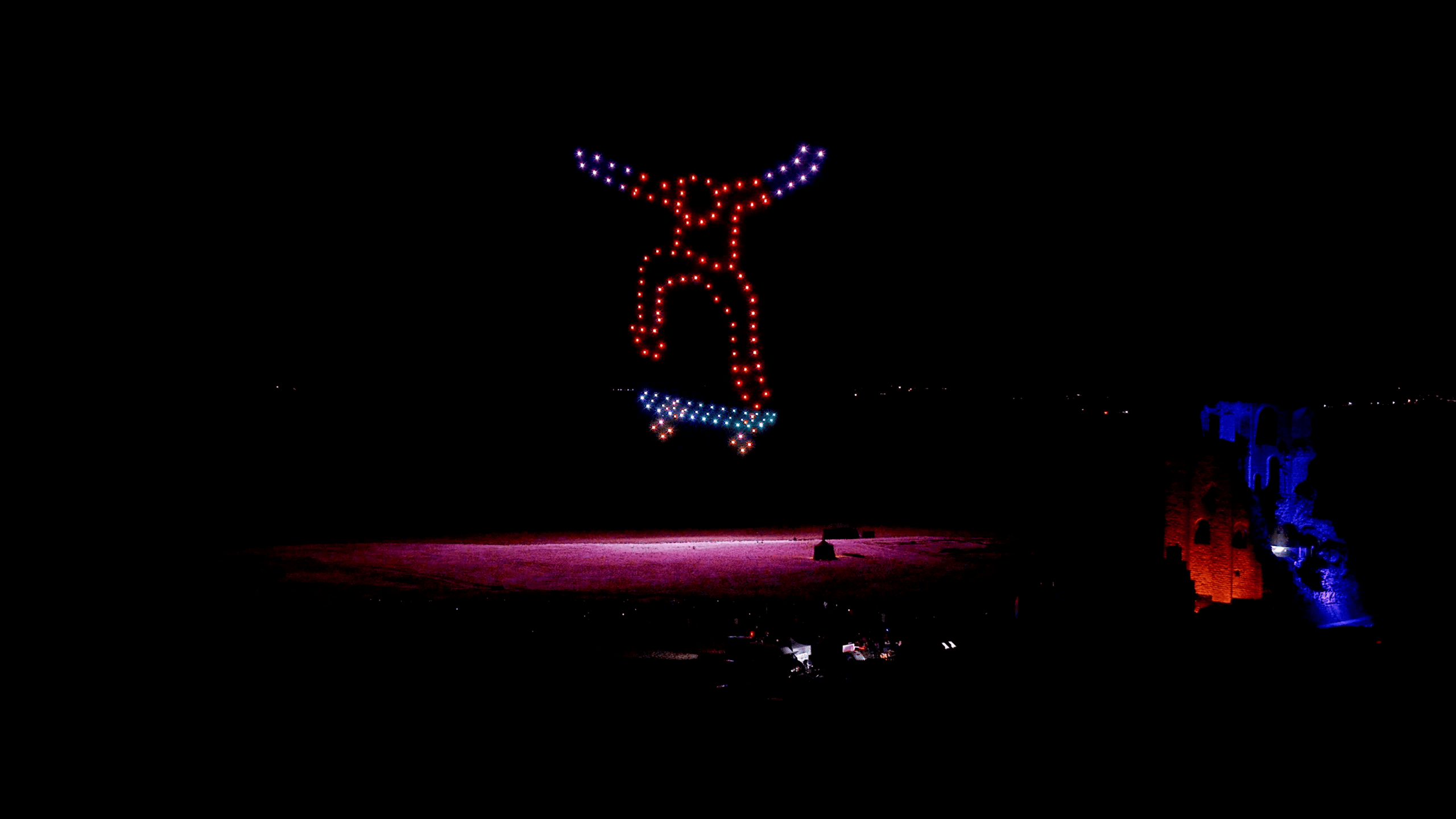
Sometimes that becomes a very literal story. We might move through different chapters of somebody’s life, follow a character through a narrative or tell the history of a place.
Other times the storytelling is more emotional. A product launch might build anticipation before a reveal. An anniversary show might begin in the past and gradually arrive at the present. A festival show might simply take an audience through changes of energy, scale and mood before reaching a huge finale.
Storytelling does not always mean somebody needs to say “once upon a time”.
It means the show has a reason for moving from one moment to the next.
The Sky Is a Stage
Our background is in theatre and live entertainment, and that has a huge influence on the way we design drone shows.
In theatre, nobody would judge an entire production by asking how impressive the individual pieces of scenery were.
The scenery supports the story.
So does the lighting.
So does the music.
So does the timing.
Drone shows are no different.
The fact that we can create an extraordinary object with hundreds of aircraft is exciting, but the more important creative question is when should the audience see it?
A logo appearing in the first thirty seconds has a completely different effect from the same logo being revealed after eight minutes of carefully constructed storytelling.
A huge image can feel small if nothing has built towards it.
A relatively simple image can generate an enormous reaction if it arrives at exactly the right point.
That is show design.
Music Drives the Story
Music is one of the most powerful storytelling tools we have.
It establishes emotion before an image has even appeared. It tells us when to build, when to hold back and when something needs to happen.
So we do not treat the soundtrack as background music for an animation.
The soundtrack and the visual show are developed together.
A change in tempo might drive a transformation. A musical hit might trigger a reveal. A quieter passage might allow an image to remain almost still before everything suddenly opens out again.
When the relationship is right, the audience may never consciously think about the synchronisation.
They simply feel that the show works.
When it is wrong, they feel that too.
That is why we put so much emphasis on getting the music right early in the creative process.
Every Formation Is a Scene
A strong drone show is not a checklist of images.
Each formation has a job to do within the wider story.
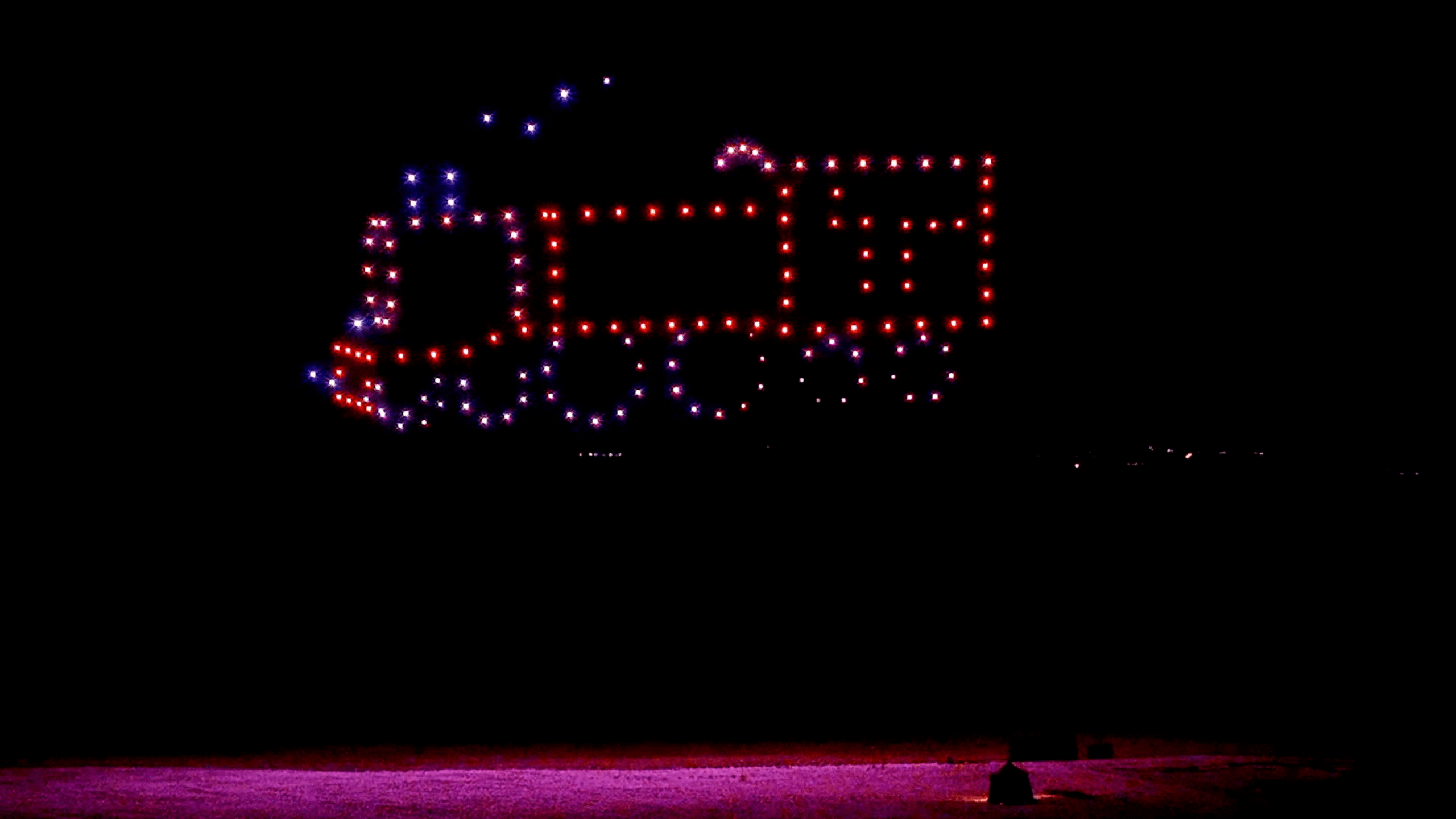
Some scenes communicate information. Some introduce a character or idea. Some exist simply because they are beautiful. Others create surprise, humour or scale.
And not every scene needs to be the most complicated thing we can possibly draw.
Good storytelling needs contrast.
If every moment is enormous, nothing feels enormous.
If every scene moves frantically, movement stops feeling exciting.
Sometimes the right thing to do is hold a beautiful image in the sky and allow the audience to absorb it.
Then, when the show moves again, the movement means something.
The Transitions Are Part of the Story
One of our favourite parts of drone show design is what happens between the obvious images.
A poor transition feels like hundreds of drones abandoning one picture and travelling to their next jobs.
A good transition feels like part of the animation.
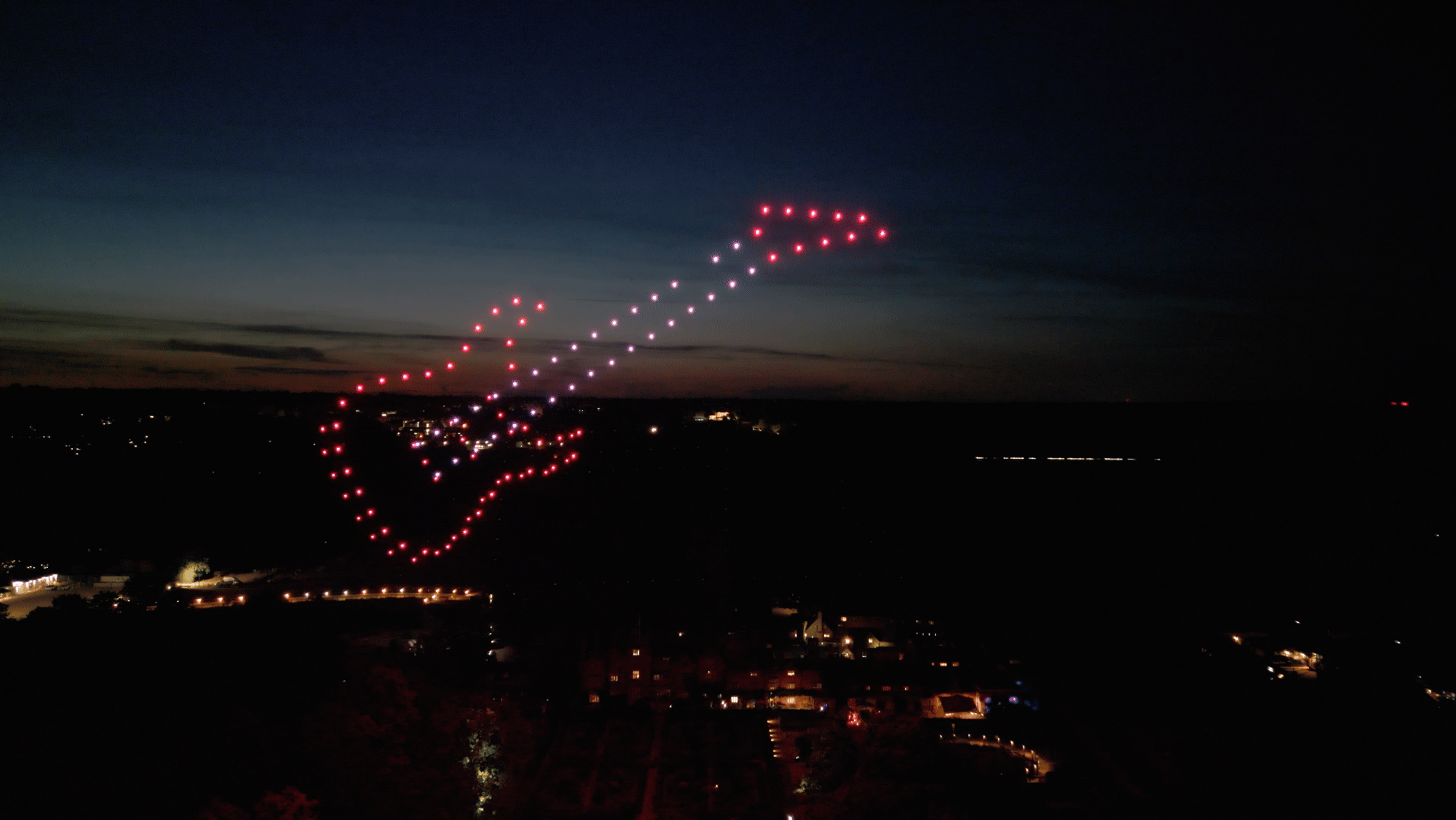
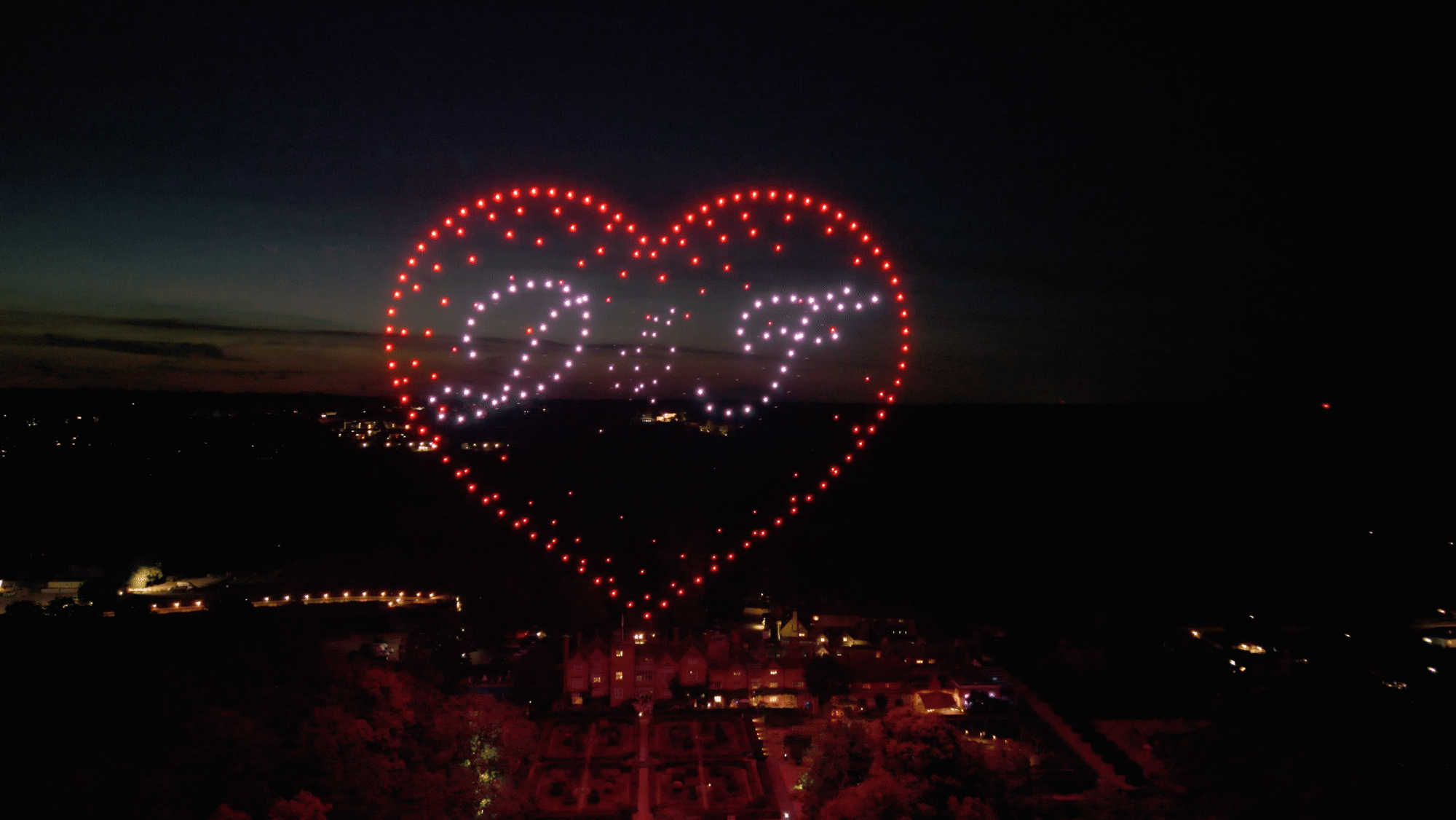
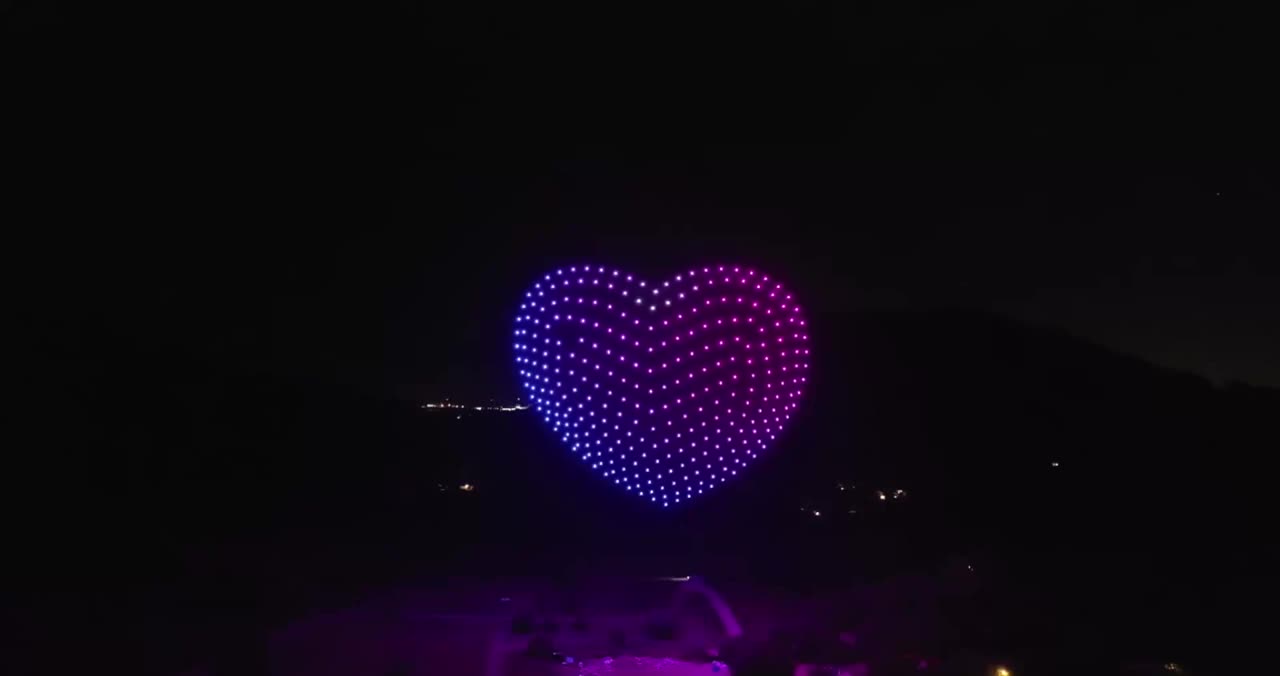
A heart can unfold into something completely different. A character can move. An object can dissolve, rotate, expand or transform into the next chapter of the show.
The audience should not feel as though they are waiting for the drones to get into position.
Something should always be happening for a reason.
This is where some of the most creative work in a drone show happens, because we are not simply designing two images.
We are designing the journey between them.
Lighting Tells the Audience Where to Look
Movement is only one layer of animation.
Every drone is also a light source, which means colour and brightness can become part of the storytelling.
We can reveal an image gradually rather than showing everything at once. Colour can travel through a formation. One element can illuminate while another disappears. A scene can pulse with the music or transform emotionally without a single drone changing position.
Lighting gives us another way to direct attention.
It can make something playful, dramatic, elegant, energetic or restrained.
And, like everything else, it works best when it has been choreographed as part of the show rather than added afterwards.
Pacing Matters
One of the hardest creative decisions is knowing when not to do something.
Drone technology makes it tempting to keep moving.
New image. New transformation. New colour. New effect.
But audiences need time.
They need time to recognise an image, understand what it means and enjoy it before the story moves on.
The best shows have rhythm.
There are moments of movement and moments of stillness. Moments of complexity and moments of simplicity. Sections that build slowly and sections that suddenly accelerate.
A finale feels bigger because the show has created somewhere to build from.
That pacing is every bit as important as the quality of the individual animations.
Bespoke Means More Than Custom Shapes
This is where we think genuinely bespoke drone shows become particularly exciting.
Bespoke should not simply mean taking a standard show and replacing somebody else’s logo with yours.
It gives us the opportunity to start with the event itself.
Its audience.
Its message.
Its history.
Its people.
Its music.
Its sense of humour.
Its reason for happening.
From there, we can create a show that could not meaningfully belong to anybody else.
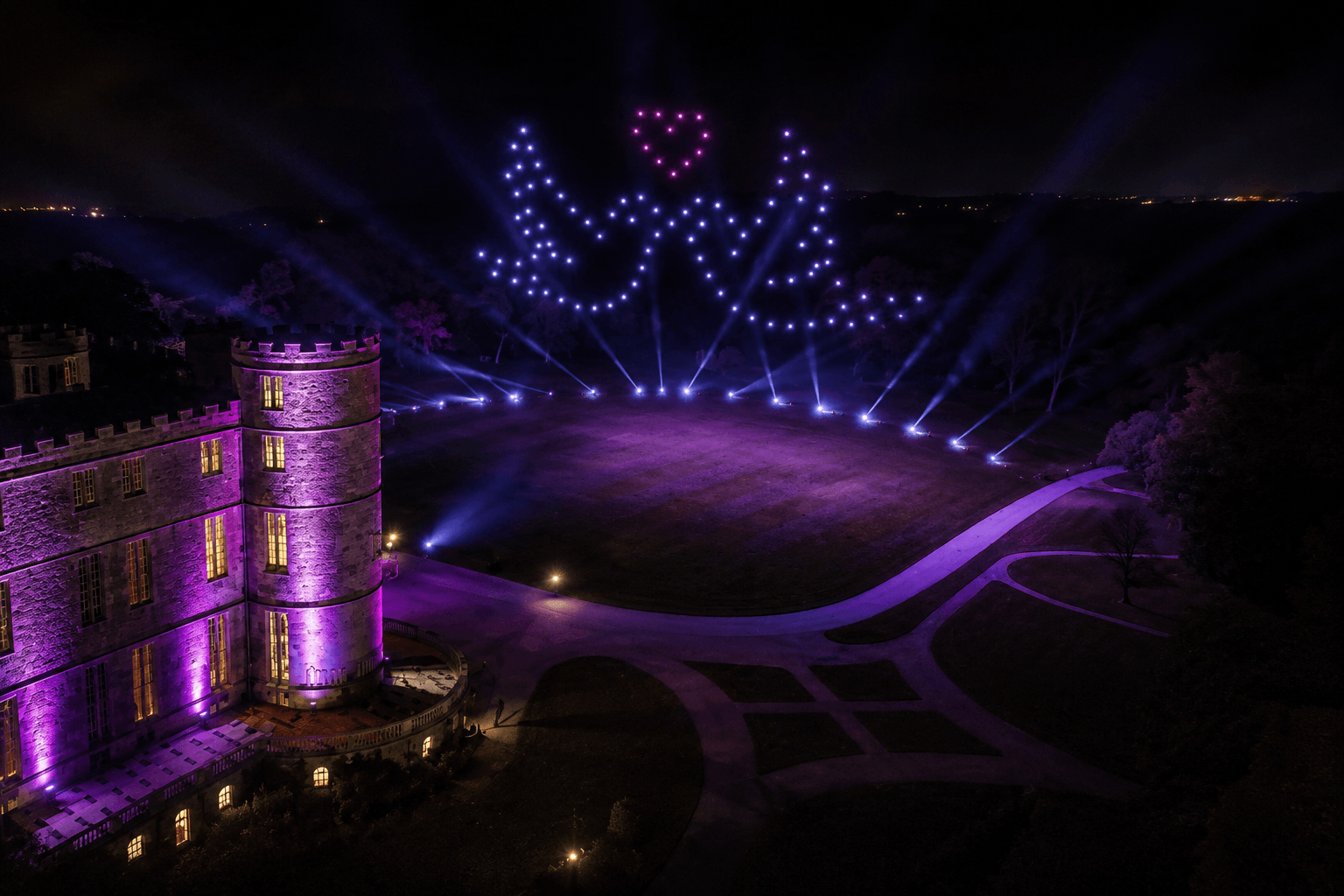
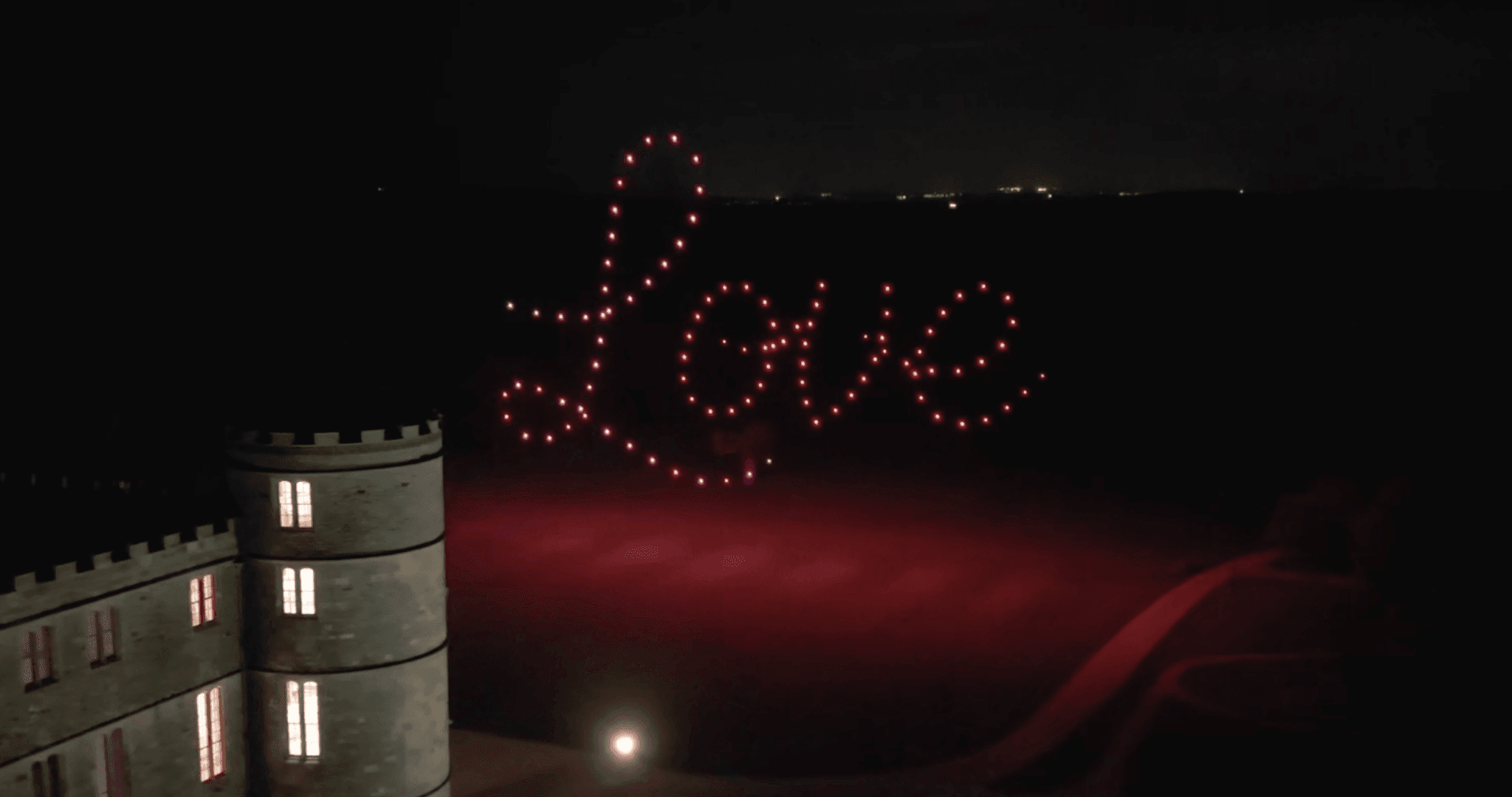
A corporate anniversary might tell forty years of company history. A destination show might move through local landmarks, characters and culture. A wedding might tell the story of two people. A public celebration might take an audience through the history of an entire community.
That is where drone light shows become a particularly powerful storytelling medium.
The scale is extraordinary, but it is the meaning behind the images that makes people care about what they are watching.
Technology Should Serve the Story
There is obviously an enormous amount of technology behind all of this.
Hundreds of aircraft have to move through three-dimensional space safely and precisely. Complex animation has to become real flight paths. Every aircraft has to reach the right place at the right time and display the right colour.
We are very proud of the technical side of what we do.
But creatively, the technology is a tool.
The audience should not spend the entire performance thinking, “That’s clever software.”
We want them laughing, cheering, recognising things, anticipating what comes next and reacting to the story.
If they are doing that, the technology is doing its job.
Creating Stories in the Stars
This is ultimately what excites us about drone shows.
They give us a canvas that previously did not exist.
We can take music, animation, lighting and live-event storytelling and put them hundreds of feet into the night sky in front of thousands of people.
And because every movement and every light can be programmed, the possibilities are extraordinary.
But unlimited possibilities are not the same as good creative work.
A brilliant drone show still needs the things every brilliant show has always needed: an idea, a structure, timing, emotion and a reason for the audience to care about what happens next.
The drones are the medium.
The story is the show.
If you are considering a bespoke drone show, explore our Bespoke Drone Light Shows or get in touch and tell us the story you want to put in the sky.
And if you are interested in what happens behind the scenes once a project begins, our guide to The Lifecycle of a Drone Show follows the complete process from the first conversation to show night.


This is a good tip particularly to those new to the blogosphere.
Brief but very accurate information… Appreciate your sharing this one.
A must read article!